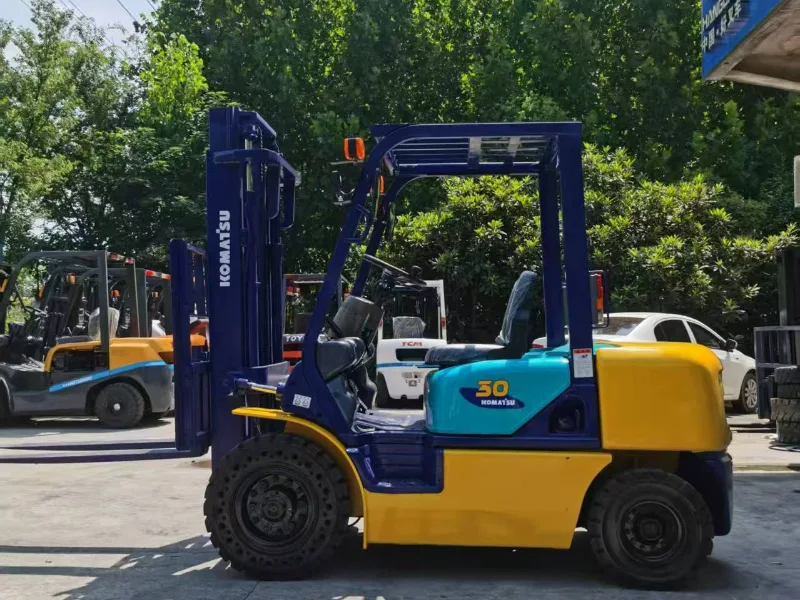
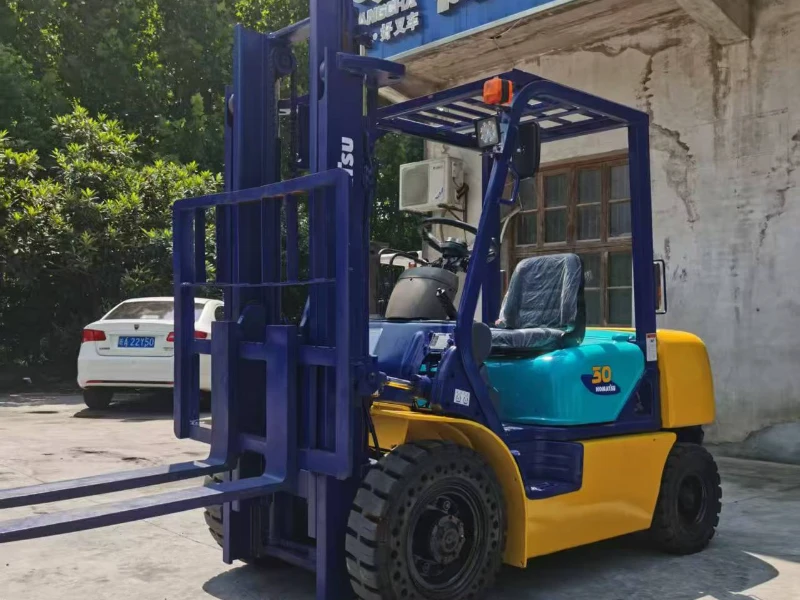
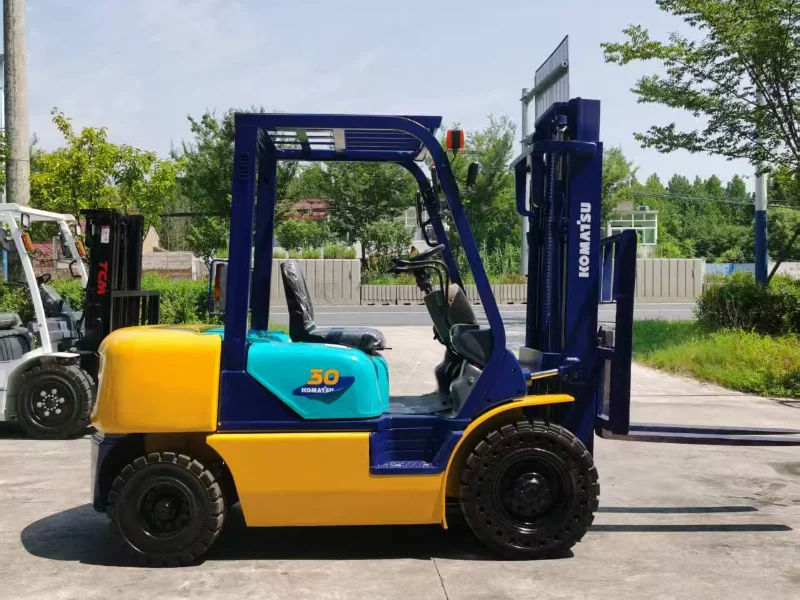
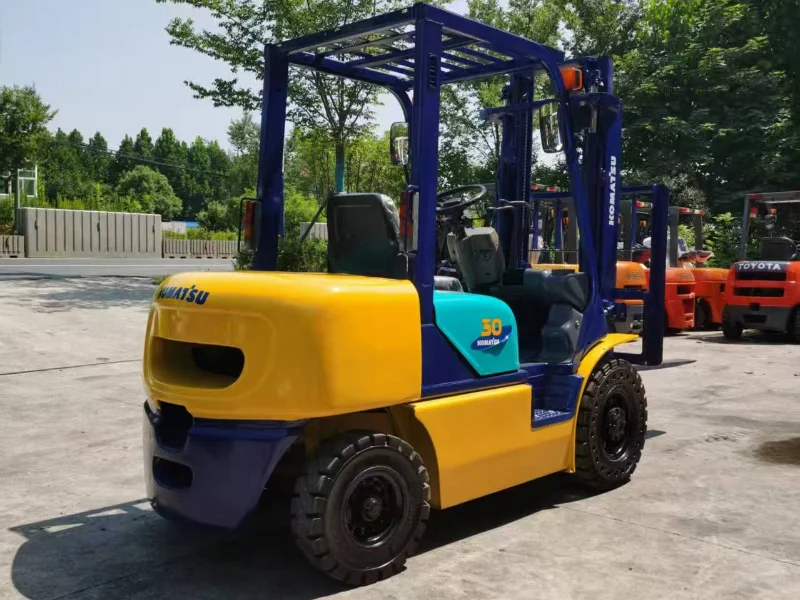
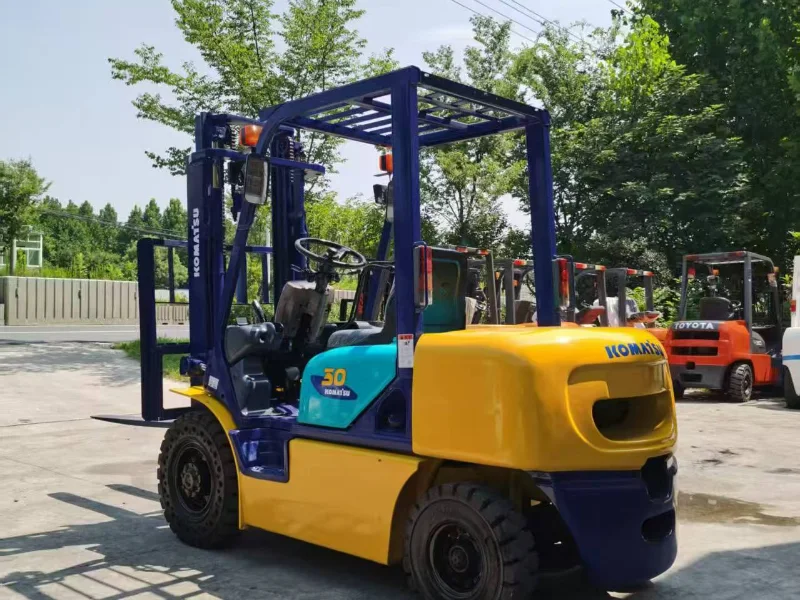
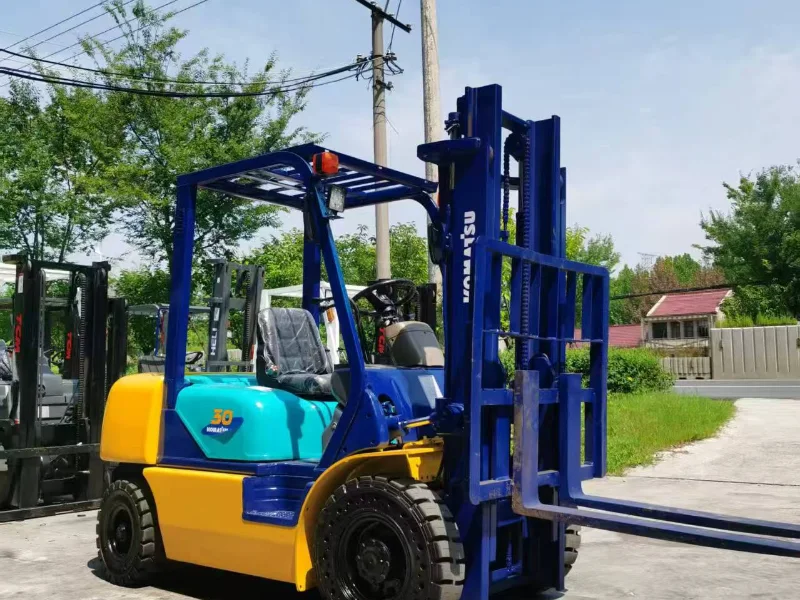
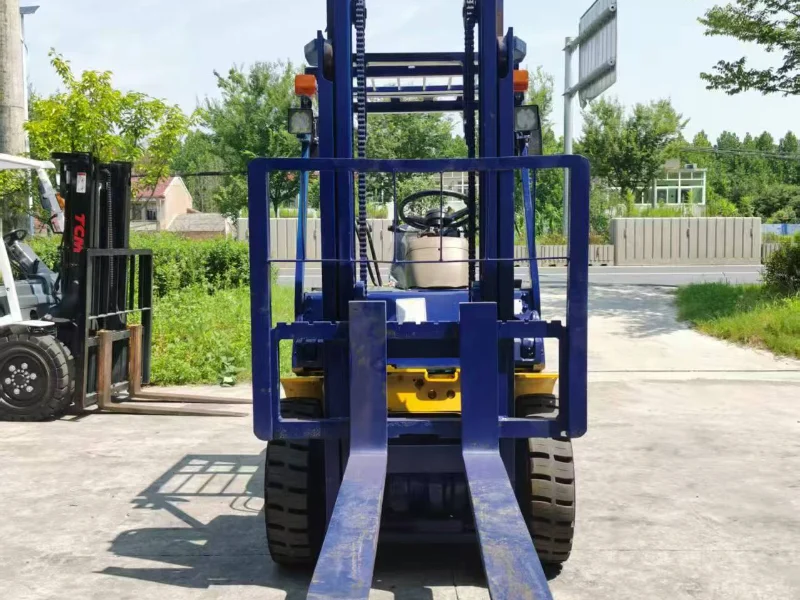
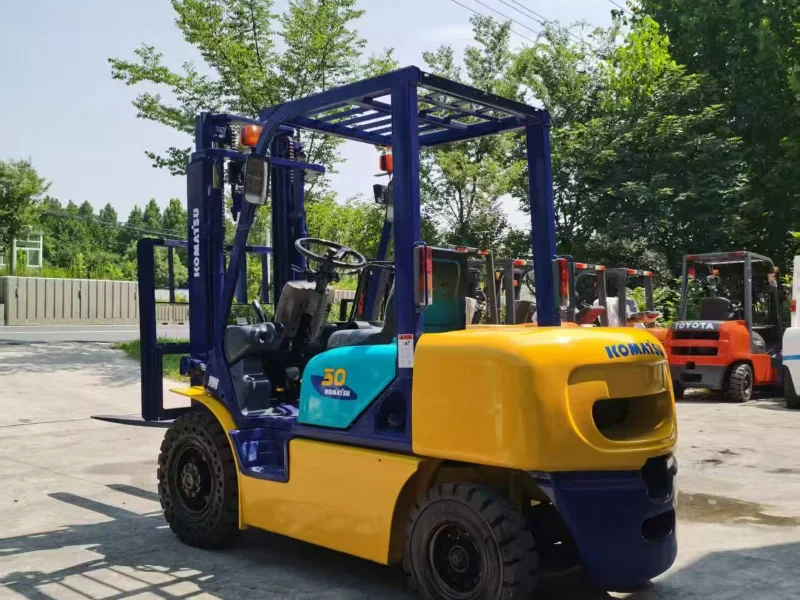
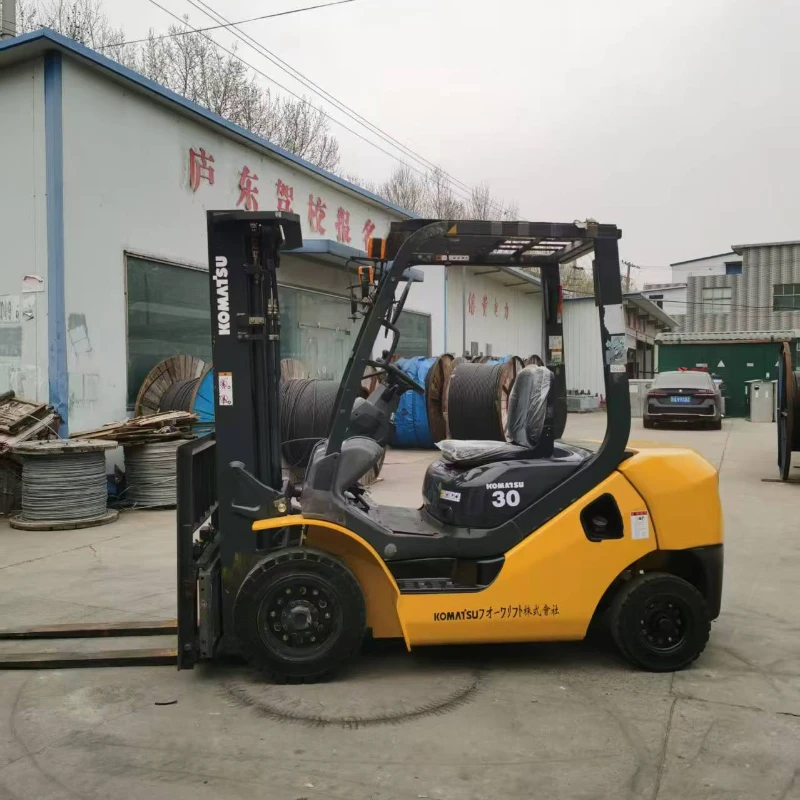
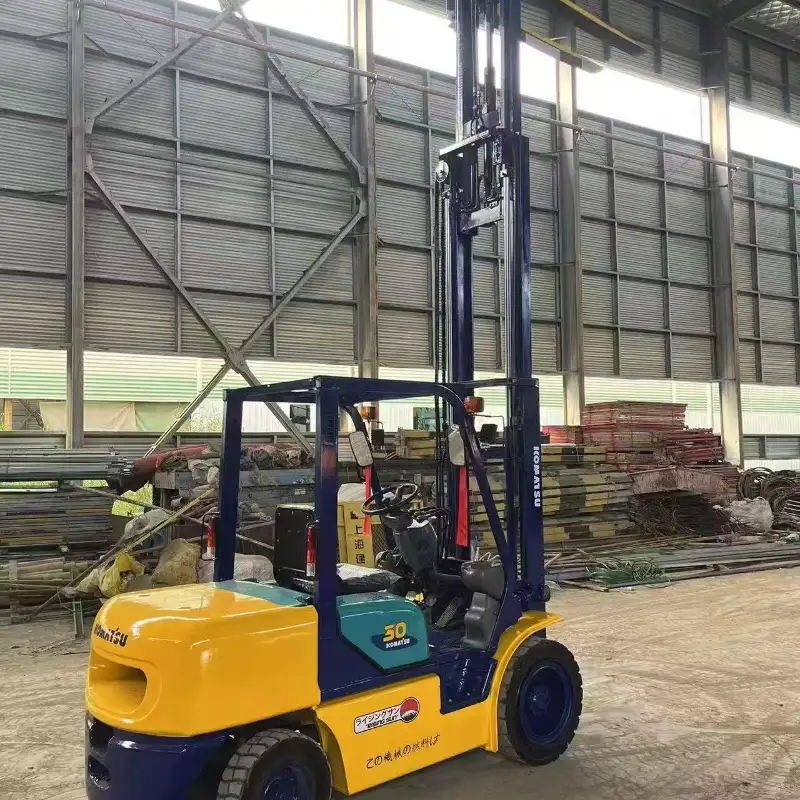
Original Japan Used forklift Komatsu 3tons diesel engine
Komatsu
Share :
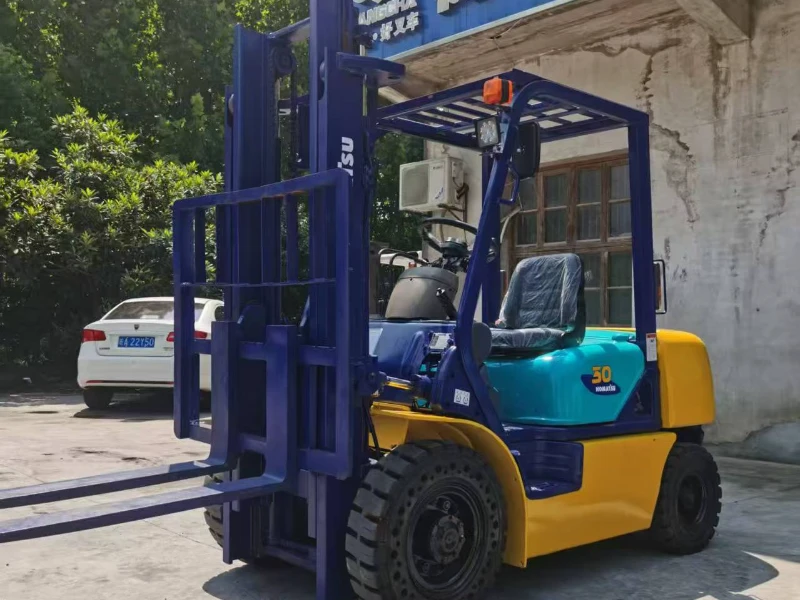
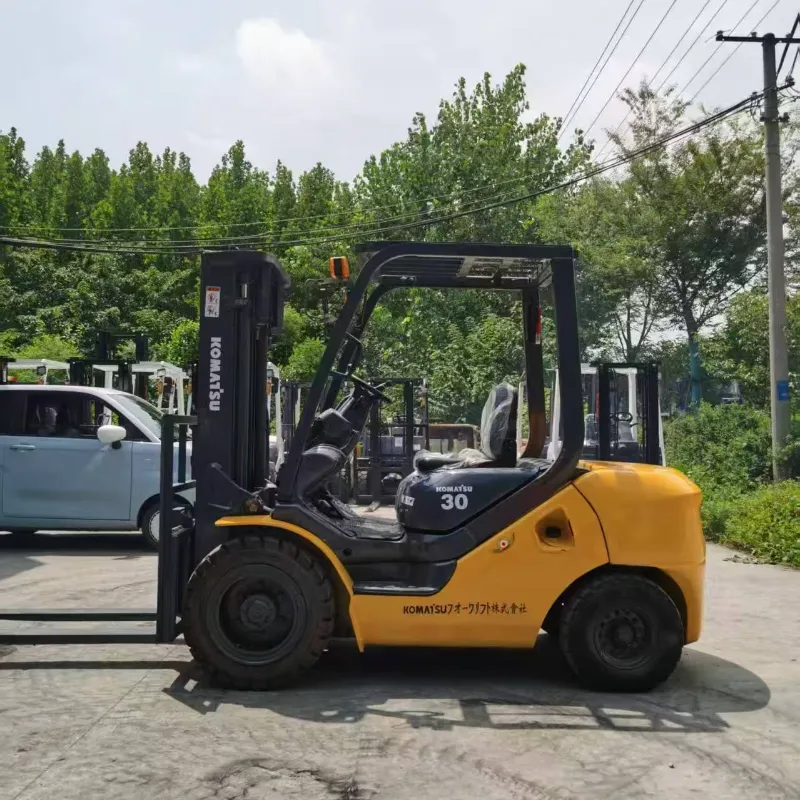
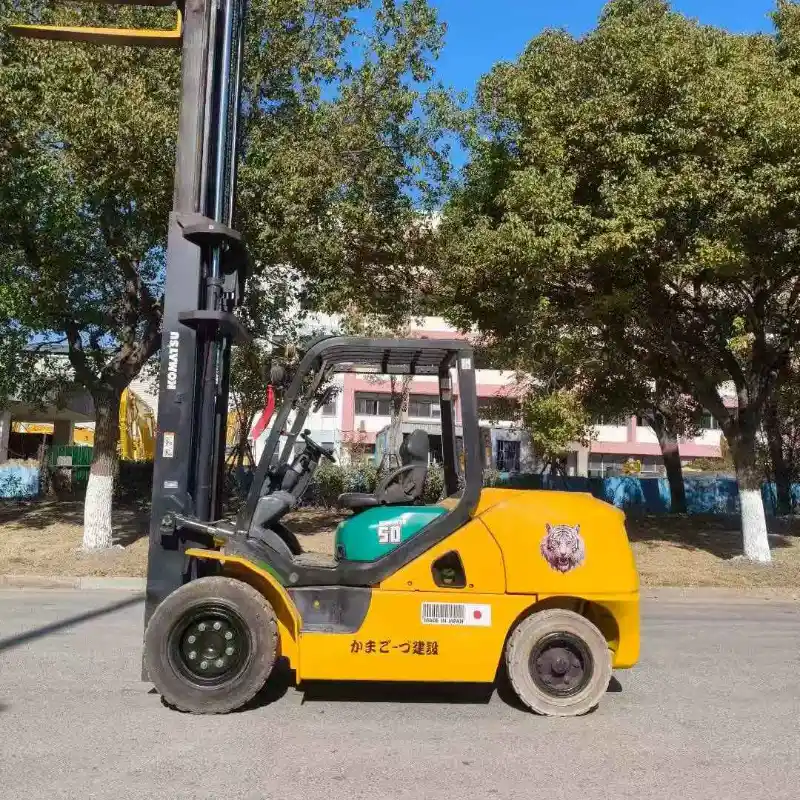
This used Komatsu 3‑ton diesel forklift features original engine with stable power for heavy‑duty handling. Its hydraulic system works smoothly. Major parts are fully inspected and serviced, ready for immediate operation. Compact and flexible, it is cost‑effective with easily‑sourced spare parts for warehouses and yards.
Model:FD30T-14
Maximum load capacity: 3000KG
Maximum lifting height: 3000mm
Vehicle weight: 4680 KG
Mode of transportation: Sea/land transport
Standard 3‑stage mast, lifting height 3000 mm (custom height available)
Fork Size:2750 × 1200 × 2150 mm
2750 × 1200 × 2150 mm
Overviews
Komatsu Forklift, inheriting world-class Japanese engineering technology, delivers durable, energy-saving and high-efficiency material handling solutions. Covering full-range electric and IC engine forklifts, our equipment features stable HST drive performance, low maintenance cost and safe humanized design. Trusted globally for industrial, warehouse and logistics heavy-duty operations.
Forklifts are essential industrial handling equipment widely used in warehouses, factories, ports, logistics yards and construction sites for loading, unloading, stacking and short-distance transportation of goods. Standard forklift operation requires trained and certified operators to ensure safe and efficient daily work.
Before operation, operators need to inspect key parts including brakes, steering, lifting system, tires and battery or engine status to eliminate potential hazards. During operation, forklifts shall run at a stable and low speed, avoid sharp turns and sudden acceleration or deceleration, and strictly follow the rated load capacity to prevent overloading, tilting or cargo falling.
For different working scenarios, electric forklifts are suitable for indoor, quiet and dust-free environments such as warehouses and pharmaceutical factories, while internal combustion forklifts are ideal for outdoor, high-intensity and heavy-duty handling work. After daily operation, operators should park the forklift on flat ground, lower the forks completely, cut off the power and conduct simple cleaning and maintenance to extend the service life of the equipment.
Applications
1.Warehousing: Pallet handling, stacking, loading/unloading 2.Logistics: Port terminals, freight yards, distribution centers 3.Manufacturing: Raw material transport, finished goods handling 4.Construction: Building material transport, site logistics 5.Agriculture: Grain handling, warehouse stacking, bulk cargo moving
Key Configurations
Engine: High-torque, low-emission diesel engine (Tier III compliant) Hydraulic System: Precision-controlled pumps and valves for smooth lifting and tilting Mast: 3-stage full free lift mast (standard 3m, optional 4.5m/6m) Cab: Ergonomic ROPS-certified cabin with air conditioning (optional) Fork & Attachments: Multiple fork length options, with optional side shifter, fork positioner, or clamp attachments Control System: Intelligent monitoring panel with fault diagnostics and hour meter
Pre-Delivery Inspection Items (English Standard Version)
1. Engine Related Systems Check for component contamination, brake fluid level and condition, battery status and other related parts.
2. Forklift Handling Equipment Inspect mast, lifting slings, lifting chains and other loading & unloading accessories.
3. Power Transmission System Inspect clutch pedal, transmission and torque converter.
4. Hydraulic System Inspect hydraulic tank, oil pipelines, hydraulic cylinders and related components.
5. Running Gear Equipment Inspect tires, wheel hubs and other walking parts.
6. Braking System Inspect service brakes and parking brakes.
7. Control System Inspect steering wheel, power steering system and steering linkage.
8. Safety Devices Inspect safety helmets, working lights, instrument panels and other safety accessories.
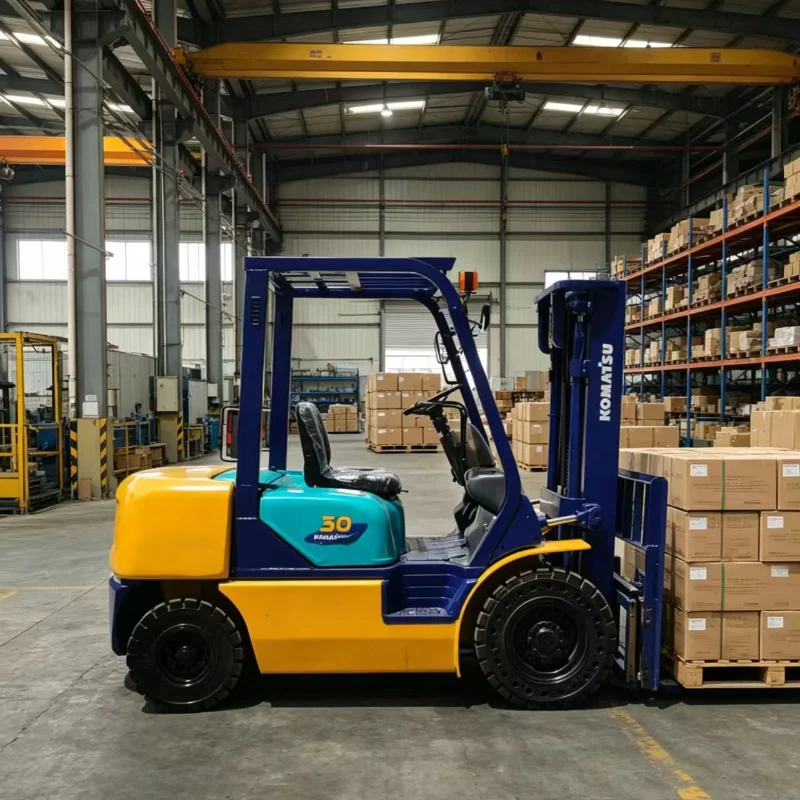
This forklift is widely used in warehouse cargo‑handling work. It safely lifts, transports and stacks palletized goods. With flexible performance for narrow aisles, it speeds up material turnover, reduces manual labor and significantly improves overall warehouse logistics efficiency.